

FMUSER Deploys Maritime Vessel IPTV System for Offshore Oil Rigs in Singapore
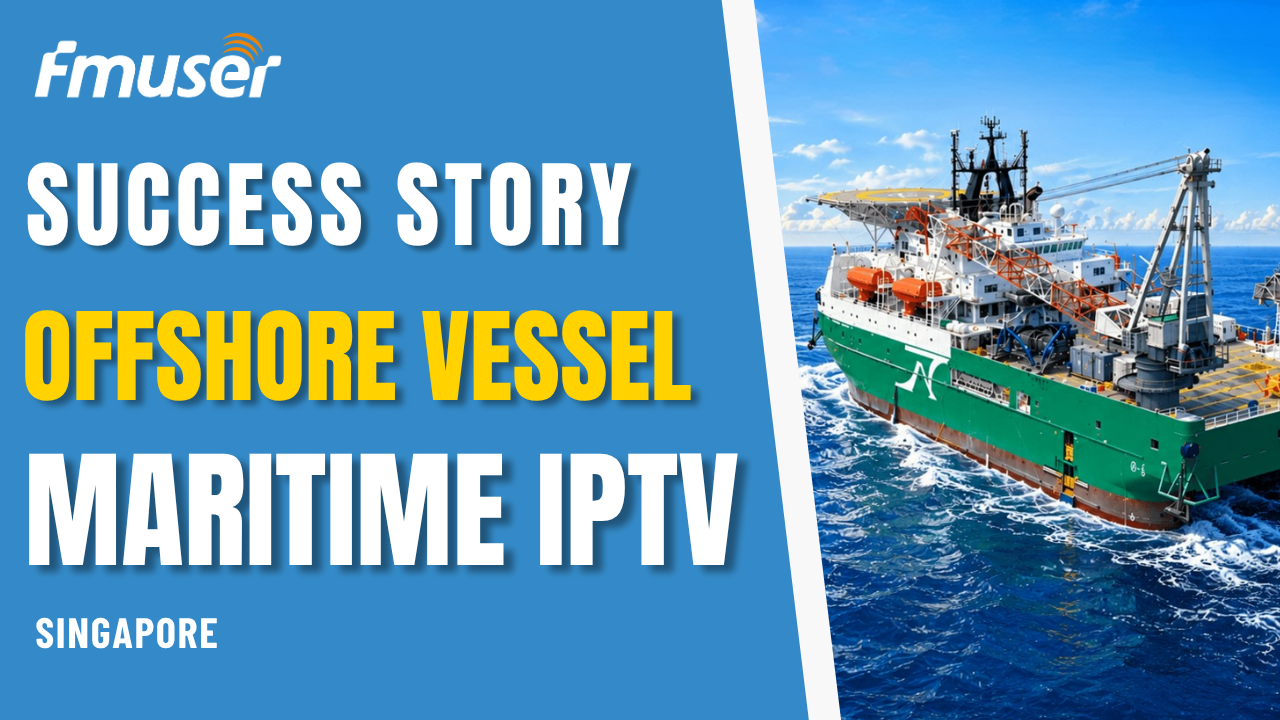
FMUSER maritime vessel IPTV system successfully deployed on a 200-cabin offshore vessel in Singapore. Utilizing the FBE801 server and FBE013 STBs, it provides stable, lag-free crew entertainment and seamless satellite TV tracking for offshore oil rig workers.
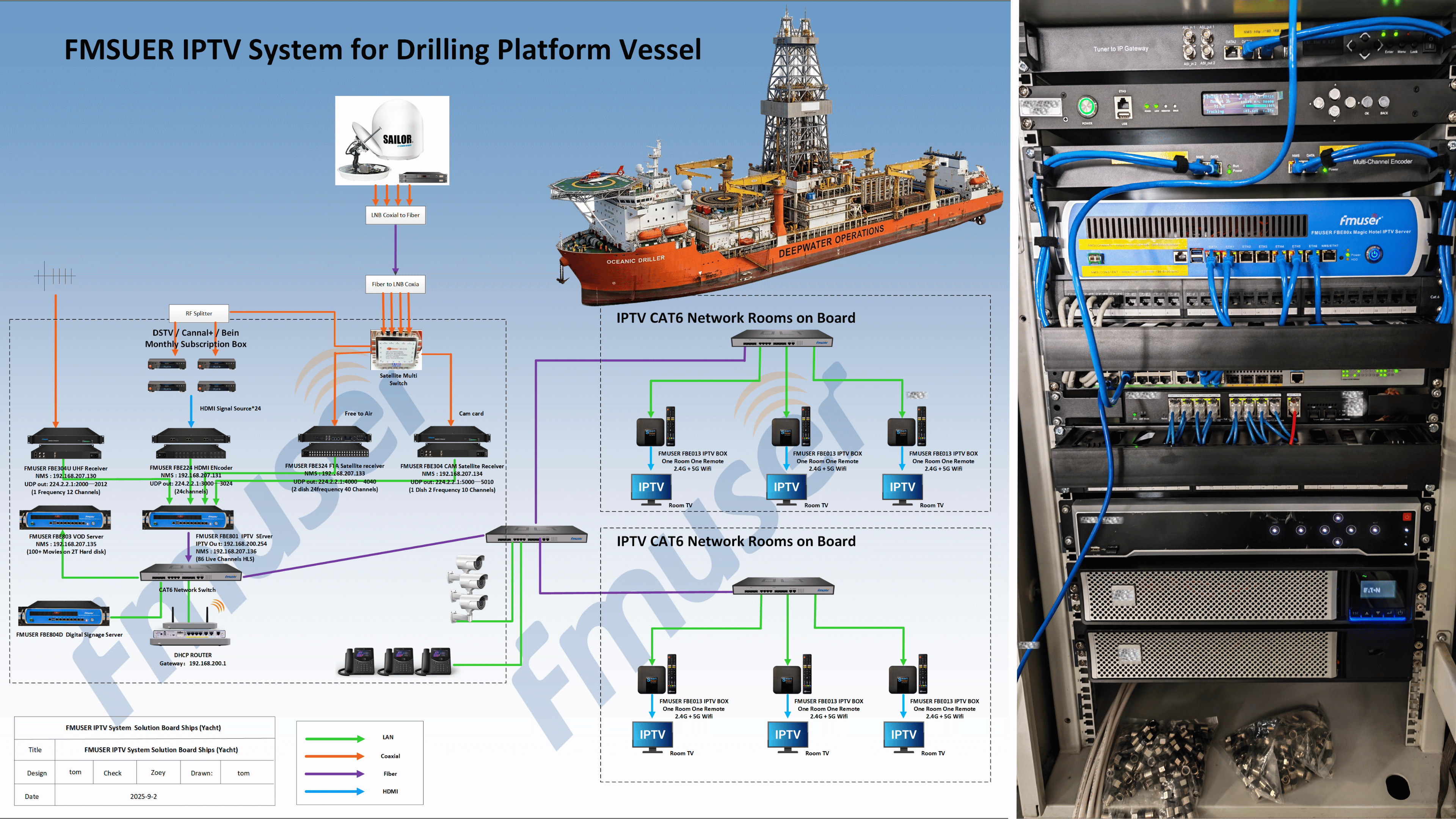
The end-to-end FMUSER maritime vessel IPTV system. The left illustrates the network topology for a drilling platform vessel, while the right displays the actual FBE801 server rack deployed to provide lag-free TV entertainment for offshore oil rigs in Sing
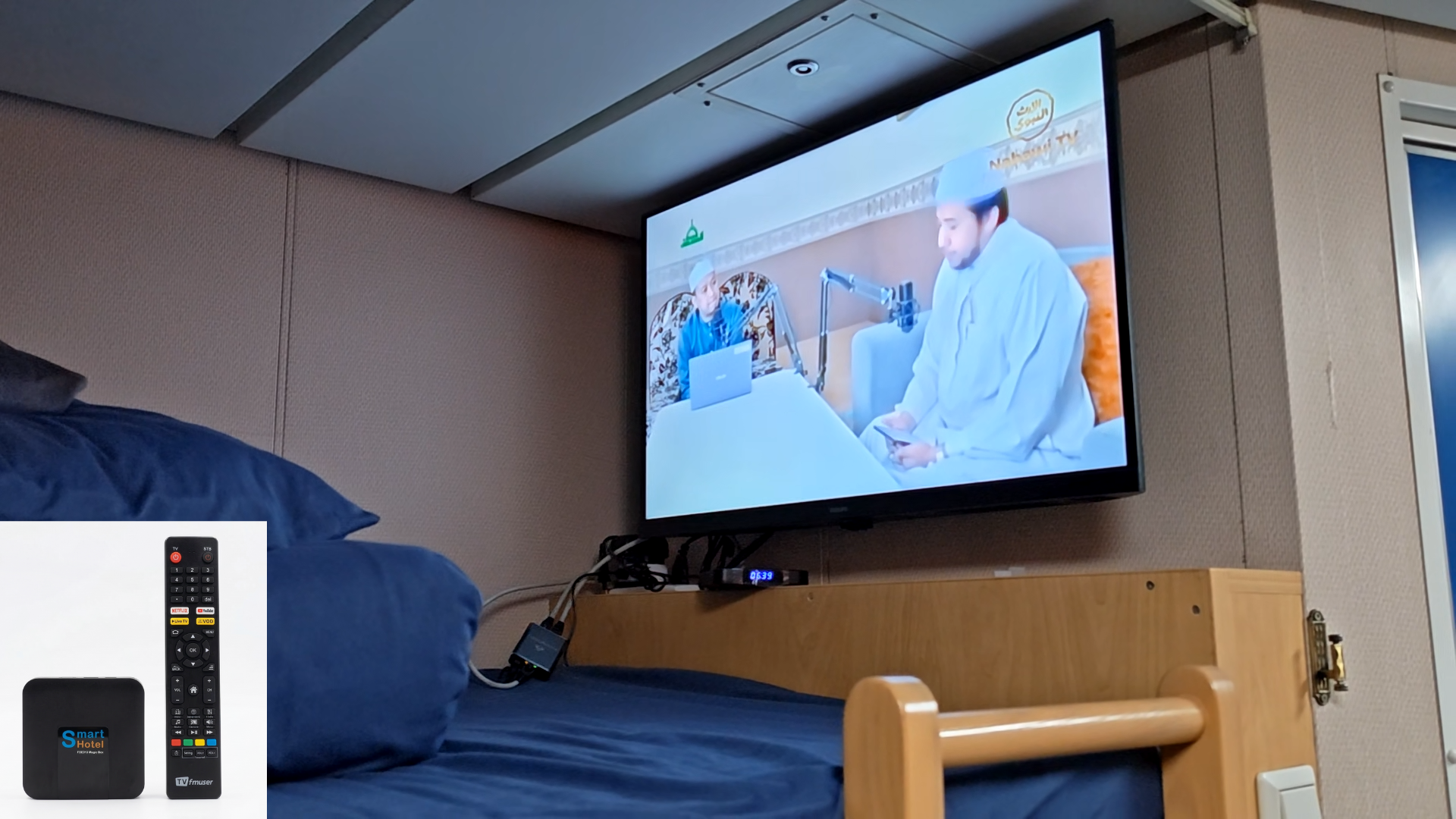
The FMUSER FBE013 smart set-top box successfully deployed above a bunk bed in a maritime vessel cabin. It delivers stable, lag-free satellite TV channels to offshore oil rig workers via the local internal network.
FMUSER deployed its maritime vessel IPTV system on a Singapore offshore oil rig, using FBE801 and FBE013 to provide stable, lag-free crew entertainment.
Building network infrastructure on offshore oil rigs and maritime vessels involves tough physical challenges. High salt fog corrosion, constant hull vibration, and unstable satellite feeds cause traditional consumer-grade TV equipment to fail frequently in extreme marine environments. For engineering teams and crews working offshore for long periods in major maritime markets like Greece, Norway, the UK, the USA, and the Middle East, the lack of a reliable, industrial-grade information and entertainment network not only affects daily communication but also greatly increases the manual maintenance costs of low-voltage systems.
The vessel has over 200 cabins. If all cabins streamed TV directly using StarLink internet, it would cause massive network congestion and buffering. With the FMUSER FBE801 IPTV system, all TV video traffic runs entirely on the local internal network, requiring no outside internet connection. Additionally, the FBE801 system is pre-loaded with satellite data for various shipping routes, including those across Europe, Asia, and North America. As the vessel sails along a specific route, the system automatically detects and switches to the corresponding satellite, allowing seamless transitions between different satellite channels across different regions.
For this marine project in Singapore, the FMUSER technical team carried out a strict system deployment. The process covered the entire cycle from hardware installation to final delivery: mounting the FMUSER FBE801 core server hardware, live testing and tuning the TVRO satellite feeds, deploying FBE013 set-top boxes onto the bunk beds in each cabin, conducting a 48-hour burn-in test and cable management, and providing system operation training for the FMUSER FBE801 IPTV system to the crew and on-site IT admins. The entire network architecture perfectly integrated with the vessel's existing TVRO satellite Antenna Control Unit (ACU). The technical team recently released a detailed engineering video log that documents the complete on-site setup, network diagnostics, and handover of this FMUSER FBE801 maritime vessel IPTV system deployment.
In this deployment, the FBE801 server provides the core processing power. It is designed for high-concurrency audio and video processing, ensuring low-latency data transmission across a multi-node network. The endpoints use FBE013 smart set-top boxes, paired with the dedicated FBE015 PLUS remote control for each TV, which have successfully passed 24/7 fault-free operation tests. For detailed technical specs on network gateways, servers, and terminal devices built for marine applications, system integrators can check the complete configurations in the company's Offshore Oil Rigs IPTV Solution engineering files.
About FMUSER
FMUSER is a technology provider specializing in hotel IPTV systems, maritime vessel IPTV systems, ISP IPTV systems, hospital IPTV systems, and residential apartment IPTV systems. The company is dedicated to providing core network equipment and end-to-end B2B delivery solutions with strict quality control standards for the hospitality, ISP, and marine engineering sectors.
Tom Lee
FMUSER
+86 139 2270 2227
sales@fmuser.com
Visit us on social media:
LinkedIn
Facebook
YouTube
Maritime Vessel IPTV for Offshore Oil Rigs FMUSER FBE801 Server Setup for Oil Workers in Singapore
Legal Disclaimer:
EIN Presswire provides this news content "as is" without warranty of any kind. We do not accept any responsibility or liability for the accuracy, content, images, videos, licenses, completeness, legality, or reliability of the information contained in this article. If you have any complaints or copyright issues related to this article, kindly contact the author above.
